Engaging with Andrea: Witnessing the Wonder of First Milestones
September 14, 2026
On the 25th Anniversary of September 11
September 14, 2026Small Decisions – By Navy Veteran Ryan
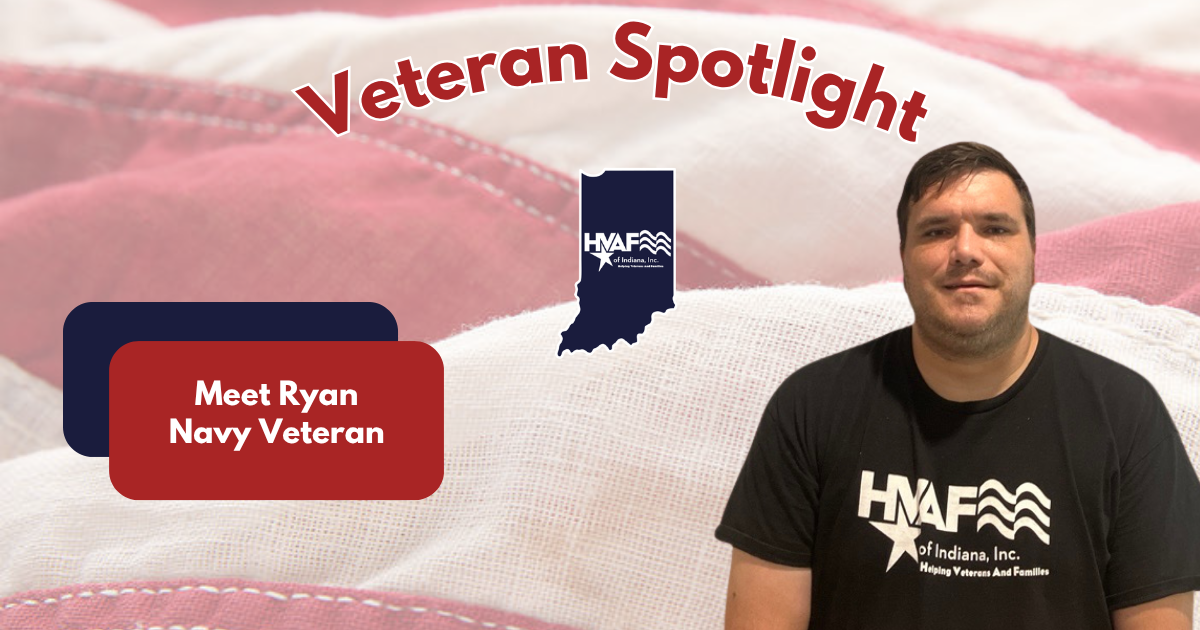
Small Decisions – By Navy Veteran Ryan
Have you ever stopped to think about how the smallest decisions can completely change the course of your life?
In the moment, they rarely feel significant. One compromise. One excuse. One shortcut. You tell yourself it isn’t a big deal, that no one will notice. But over time, those choices begin to stack on top of each other until you realize you’ve wandered far from the person you wanted to be.
I know because I’ve lived it. I also know that the opposite is true.
One decision to ask for help. One meeting. One person willing to believe in you. One organization willing to invest in your future. Those small decisions can change your life just as dramatically.
Growing Up
I was born in Carbondale, Illinois, while both of my parents were attending Southern Illinois University. Not long after I was born, my parents divorced, and my mom and I moved back to her hometown of Paris, Illinois.
Despite the divorce, I spent weekends with my dad. We camped, fished, and took long drives with good music playing through the speakers. Those are some of my happiest childhood memories. Then everything changed.
One day, while driving to visit me, my father was killed in a car accident. His death sent shockwaves through our family, and the loss echoed throughout my childhood. Looking back, I can still see how deeply it shaped the person I became.
Eventually my mother remarried, and as I got older, life at home became increasingly difficult. After years of conflict with my stepfather, I moved in with my grandparents. Their home became a place of stability.
High school was one of the brighter chapters of my life. I played varsity football, competed on the tennis team, and performed in several drama club productions before graduating and heading back to Carbondale to attend Southern Illinois University.
Finding My Purpose
College didn’t go as planned. I coasted through high school, and when college demanded more from me, I wasn’t prepared. After dropping out, I spent two years drifting between part-time jobs, unsure of what came next.
Then one day I saw a Navy recruiting commercial asking a simple question:”If someone wrote a book about your life, would anyone want to read it?” That question stayed with me.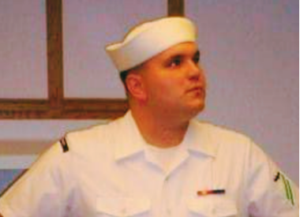
Although an old football injury kept me from the infantry, I still wanted to serve. So, on June 6, 2006, I enlisted in the United States Navy.
Over the next several years, the Navy took me across the country and eventually around the world. I trained in Florida, served alongside Marines in Cherry Point, North Carolina, and was later stationed at Naval Air Station Whidbey Island in Washington as an Aviation Electrician’s Mate specializing in aircraft power generation.
Deployments aboard aircraft carriers weren’t easy. Being away from my wife for months at a time put strain on our marriage, but I also experienced incredible opportunities. I visited Hong Kong, Japan, Thailand, Malaysia, Singapore, South Korea, Bahrain, Dubai, Guam, and Hawaii. I worked hard, read countless books, and built friendships I’ll always value.
When my enlistment ended, I returned to civilian life hopeful about the future.
When Everything Started Falling Apart
After leaving the Navy, I went back to college and was thriving academically. Then life changed again. My daughter was born. We moved back to my hometown, and the long commute eventually forced me to leave school.
Around that same time, my health began to deteriorate.The back injury I had suffered while deployed became increasingly painful. Doctors prescribed pain medication on and off while searching for answers, but instead of improving, my condition continued to worsen.
Then, in 2016, I suffered a seizure that collapsed a vertebra in the middle of my spine. It remains the most painful experience of my life.
The pain spread throughout my body. Severe gastrointestinal problems made it difficult to function.
I could barely make it through a day.
The hardest part wasn’t just the pain. It was that many medical professionals, and even people close to me, didn’t believe me. I was treated as if I were exaggerating or simply seeking drugs. I began wondering if anyone would ever find the answer. Then one emergency room visit changed everything.
A physician filling in for the weekend listened to my story. Instead of dismissing me, he believed me. Within hours I was undergoing extensive testing. When he returned with my MRI results, the color had drained from his face. According to the scans, tumors covered nearly every lymph node in my body. He believed I had late-stage cancer.
I was immediately transferred to the Richard L. Roudebush VA Medical Center in Indianapolis for additional testing. Thankfully, the diagnosis turned out to be advanced testicular cancer, a frightening diagnosis, but one that could still be treated. I underwent surgery followed by six rounds of chemotherapy over twelve weeks.
The treatment saved my life. But it also changed it forever.
Addiction
The pain from the cancer, and the treatment itself, required stronger and stronger pain medication. By the time chemotherapy ended, my body had become dependent on opioids. When the prescriptions stopped, the withdrawal began. Desperate to avoid being sick, I started buying pills on the street.
Then came the pandemic.
My marriage ended.
I kept my addiction hidden while my life quietly unraveled. Someone suggested kratom to help with my chronic pain.
At first it seemed harmless.
Then, I was introduced to 7-hydroxymitragynine, commonly called 7OH.
Nothing had ever taken hold of me the way it did. Within days I was physically dependent.
Without it, I couldn’t function. Every relationship in my life suffered. Bills piled up. My priorities disappeared. Eventually, I became homeless.
While I was in treatment, everything I owned — family photographs, keepsakes from relatives who had passed away, clothing, collections, decades of memories — was lost when my belongings were towed away with my car. I walked away with almost nothing.
Choosing Recovery
Recovery began with another small decision.
I asked for help.
I entered a six-week VA residential rehabilitation program in Dayton, Ohio, where therapy and peer support helped me understand the roots of my addiction instead of simply treating the symptoms. Afterward, I moved to the VA Domiciliary in Indianapolis. It was there that I attended my first Recovery Dharma meeting.
Meditation, community, and honest conversations gave me something addiction never could: peace.
For the first time in years, I wasn’t trying to survive. I was learning how to live again.
Finding HVAF
 When I left the Domiciliary, I was recommended to connect with HVAF, and was thankful I did. With no down-time between the Domiciliary, I was enrolled in HVAF’s permanent supportive housing program and moved into Vet’s Villa Apartments. My own place.
Along with housing I also was given the opportunity to build on that stability and enrolled in HVAF’s VetWorks internship program.
That opportunity changed my life.
After interviewing, I was able to join HVAF’s advancement team, in their marketing department. Working with the Advancement team helped me rediscover a passion I didn’t realize I still had: communications and storytelling. I’ve learned how to create social media campaigns, design marketing materials, conduct interviews, write articles, and photograph events. Every day has strengthened my confidence while helping me build skills for a new career.
I’ve also got to see first hand what makes HVAF different.
One day I was able to join Rodney, HVAF’s street outreach coordinator, on his daily drives to connect with the homeless community. I watched veterans on the street recognize the HVAF vehicle with relief instead of hesitation. They knew help had arrived. That trust isn’t built overnight. It’s earned through years of showing up for veterans when they have nowhere else to turn.
I know because HVAF showed up for me.
They provided housing when I had nowhere to go. They gave me meaningful work when I needed purpose. They invested in my future when I struggled to believe I still had one.
To Our Donors
If you’ve ever donated to HVAF, thank you. You may never meet the veterans whose lives you’ve changed, but I can promise you this: your generosity matters. It provides food, shelter, employment opportunities, and hope for people who often believe they’ve run out of all four.
I’m one of them.
A New Direction
My life wasn’t changed by one dramatic moment. It changed through hundreds of small decisions. Choosing treatment. Walking into a recovery meeting. Accepting help. Showing up for an internship. Believing that tomorrow could be better than yesterday.
Those decisions slowly led me away from addiction and toward recovery. Today, I’m building a future I never thought was possible.
The same principle that once led me toward destruction now leads me toward healing.
Small decisions still change lives.
I’m living proof.